
Here's an opening puzzle that should make us pause: walk into most contemporary churches and ask what does salvation mean, and you'll likely hear about personal forgiveness, going to heaven when you die, or being "born again." Walk into a first-century synagogue and ask the same question, and you'd hear about liberation from Rome, the restoration of Israel, and God's (alohim) kingdom coming to earth, whom the Hebrews called YHWH (Yahuah). Same word, utterly different worlds of meaning.
This isn't merely an academic exercise in historical theology. How we understand salvation shapes everything from personal spiritual formation to church mission to political engagement. The question isn't whether ancient or modern meanings are "correct," but whether we can recover a vision robust enough to hold them both together. What we discover along the way may surprise us: the gap between Second Temple Jewish expectations and modern Christian soteriology isn't just semantic drift. It represents a fundamental shift in worldview that happened gradually, reflecting different historical crises and different philosophical frameworks.
Most remarkably, contemporary debates about "once saved, always saved" or personal assurance would have been incomprehensible to first-century Jews asking about salvation. They weren't asking, "How do I know I'm going to heaven?" They were asking, "When will God finally act to deliver his people?" The shift from corporate, historical, and political categories to individual, spiritual, and otherworldly ones tells us as much about ourselves as about our ancestors in the faith.
The Second Temple Jewish Vision: Corporate Deliverance
When Salvation Meant National Restoration
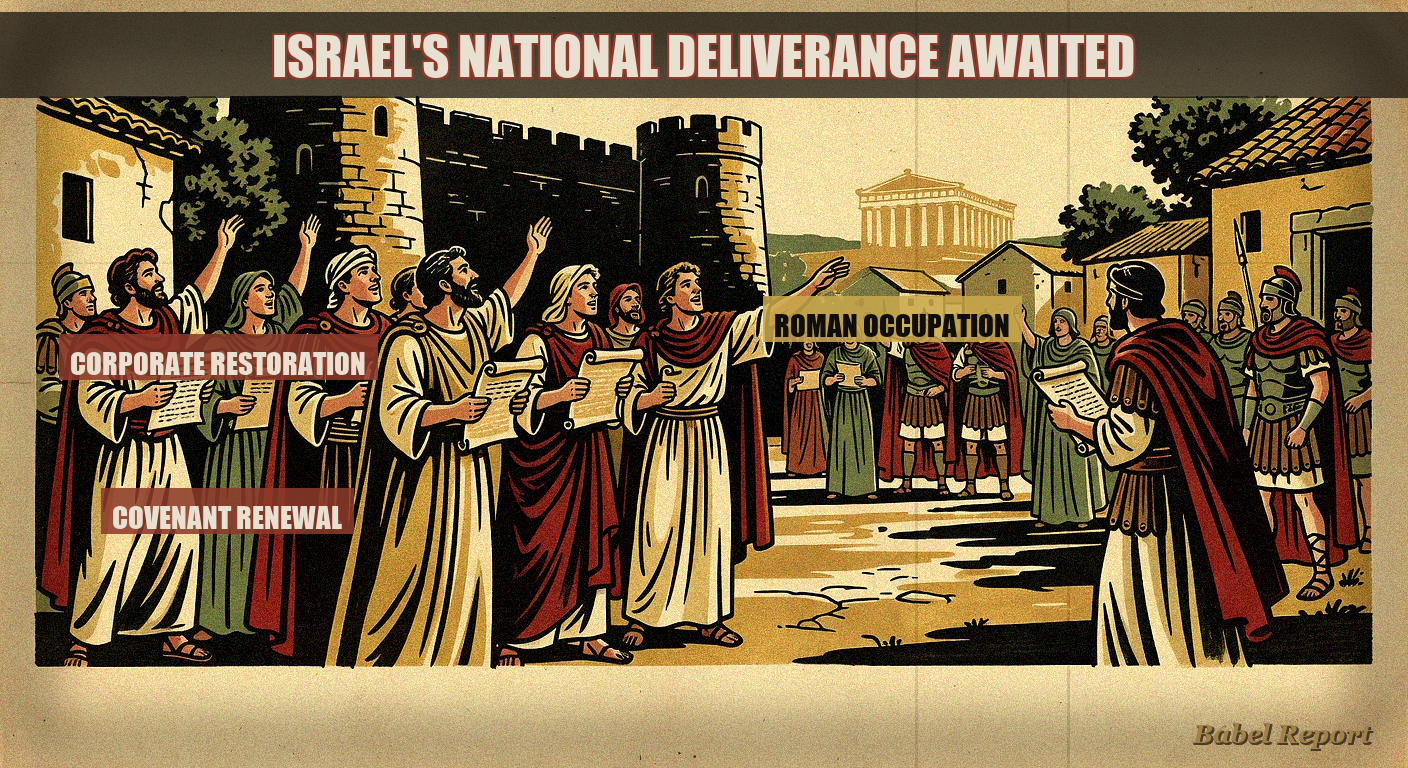
To understand what salvation actually meant in the biblical world, we must begin where the story begins: with a people in exile. Second Temple Judaism understood salvation primarily as God's rescue of Israel from political oppression and covenant exile, not individual spiritual rescue. The Hebrew scriptures had promised that God would gather his scattered people, restore their fortunes, and establish his kingdom on earth. This wasn't abstract theology but urgent political hope.
Consider the situation. Rome had crushed Jewish independence. The temple, though rebuilt, operated under foreign oversight. The land promised to Abraham remained under gentile control. Torah-observant Jews found themselves marginalized in their own homeland. Daily life pressed a single question: when would the Lord (YHWH) act to restore Israel's fortunes as he had promised through the prophets?
This is why salvation language in the Hebrew scriptures consistently focuses on deliverance from enemies, restoration of land, and the reestablishment of proper worship. The Psalms cry out for God to "save" his people from their oppressors. The prophets promise that God will "redeem" Israel from captivity. Even the individual laments assume that personal deliverance occurs within the larger narrative of God's covenant faithfulness to his people as a whole.
When Second Temple Jews spoke of salvation, they weren't thinking about where individuals go when they die. They were thinking about when God would intervene in history to vindicate his people and establish his justice on earth. That's the point. Salvation was fundamentally corporate, historical, and this-worldly. It meant God acting to restore his creation and his people within creation, not rescuing souls from creation.
The Coming Age (Ha'olam Ha-ba) vs. Heavenly Escape
This corporate vision comes into sharp focus when we examine what first-century Jews meant by "eternal life." When we read passages that raise the question "What must I do to inherit eternal life?" we should know that the modern Western understanding ("How can I go to heaven when I die?") is radically anachronistic. The question means, rather, "How can I be part of the Coming Age, the Age to Come, ha'olam ha-ba?"
The Age to Come wasn't much like the heaven of medieval and post-medieval Western Christianity. Jewish apocalyptic literature envisioned God's future intervention as the renewal and transformation of this world, not escape from it. Daniel's vision of the son of man receiving an everlasting kingdom wasn't about souls going to heaven, but about God's people being vindicated and given dominion over the earth. Isaiah's promise of new heavens and new earth didn't mean replacement of the physical cosmos but its restoration and renewal.
Here is what strikes me as most remarkable: Jewish hope was thoroughly materialist in the best sense. God would raise the dead to bodily life in a renewed creation. The righteous would inherit the earth, not abandon it. Justice would flow like waters over the land, not be postponed to some otherworldly realm. The Age to Come would be this age set right, not some completely different realm altogether.
This explains why Jesus (YHWShA) consistently spoke of the kingdom of heaven coming to earth, why he taught his disciples to pray "Your kingdom come, your will be done on earth as it is in heaven," and why his parables describe the kingdom in thoroughly this-worldly terms: banquets, harvests, cities, kings ruling over actual territories. The kingdom language that pervades the New Testament makes sense only within this Jewish framework of cosmic renewal, not otherworldly escape.
Resurrection as Communal Vindication
The doctrine of resurrection, central to Jewish hope, illuminates this corporate vision perfectly. Although resurrection is naturally something individuals can hope for, the belief was always focused on a general resurrection at the end of the present age and the start of the age to come. This would be a raising to life in which all Israel, with suitable provisions for righteous gentiles, would participate in God's renewed world.
Resurrection wasn't primarily about individual survival after death. It was about God's vindication of his people at the climax of history. The righteous who had suffered under foreign oppression, who had died faithful to the covenant while watching their nation's humiliation, would be raised to participate in Israel's restoration. God would prove himself faithful to his promises by bringing his people through death itself into the life of the world to come.
The Maccabean literature makes this crystal clear. Jewish martyrs died trusting not in personal immortality but in God's coming resurrection that would vindicate their faithfulness and restore Israel's independence. Their individual deaths gained meaning within the corporate narrative of God's covenant faithfulness. They would be raised not to escape the world but to inherit it when God finally established his kingdom.
This communal framework explains why Paul could speak of being "in Christ" as the fundamental reality of salvation, why the early Christian writers consistently described salvation in terms of membership in God's people, and why the biblical vision culminates not in individual souls going to heaven but in the holy city coming down from heaven to a renewed earth. The story is not over. It's moving toward the vindication of God's people and the restoration of his creation.
The Shift From Political to Personal: How Salvation Changed
From Roman Occupation to Sin Nature
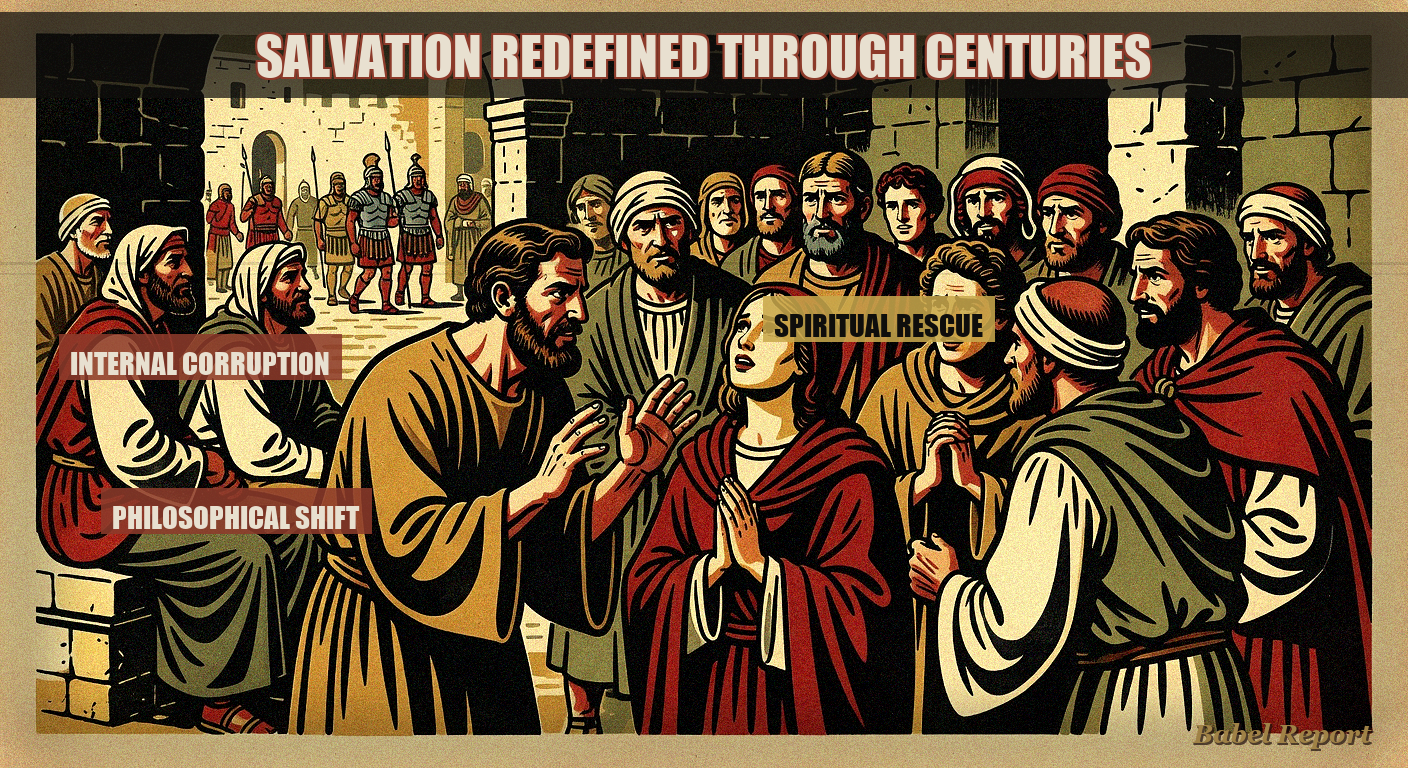
The transformation of salvation language from liberation from earthly oppressors to rescue from internal spiritual corruption didn't happen overnight. It developed gradually as Christian communities faced different crises than their Jewish ancestors and absorbed different philosophical frameworks. Understanding this shift requires tracing how the original corporate and historical focus gradually gave way to individual and otherworldly concerns.
The earliest Christian communities still operated largely within Jewish categories. They proclaimed Jesus as the Messiah who had inaugurated God's kingdom, who would return to complete the restoration of Israel and the renewal of creation. Paul's letters consistently frame salvation in terms of what God has accomplished in Christ for the benefit of both Jews and gentiles, bringing them together into one renewed humanity. The problem being solved is primarily the alienation between peoples and the corruption of creation, not individual guilt requiring personal forgiveness.
But as Christianity moved into the Greek-speaking world and encountered different philosophical traditions, the emphasis gradually shifted. Greek thought tended to see the material world as inferior to the spiritual realm, the body as a prison for the soul, and salvation as escape from physical existence to purely spiritual reality. These categories, foreign to Hebrew thought, slowly infiltrated Christian theology.
By the medieval period, the shift was complete. Salvation had become primarily about individual souls going to heaven after death, with little connection to the biblical vision of cosmic renewal or corporate vindication. The political dimensions of salvation language – God's justice rolling down like waters, the oppressed being lifted up, the mighty being brought low – were either ignored or spiritualized beyond recognition.
This is the problem. What began as hope for God's comprehensive restoration project became reduced to personal afterlife insurance. The biblical narrative of God making all things new was replaced by the Greek story of souls escaping from material existence altogether.
Individual Soul-Saving vs. Cosmic Renewal
This narrowing of salvation language created a false dichotomy that continues to plague contemporary Christianity: the split between "spiritual" concerns and "worldly" ones, between saving souls and seeking justice, between personal piety and political engagement. The biblical writers never imagined such divisions because they understood salvation as God's single, comprehensive project of making all things new.
Consider how differently the two frameworks approach the mission of God's people. In the reduced version, the church's primary task is getting individual souls into heaven when they die, with any concern for present suffering or injustice being at best a secondary application of the gospel. In the biblical version, the church's task is being a sign and foretaste of God's coming kingdom, working for both personal transformation and social renewal as aspects of one hope.
The consequences cascade through every aspect of Christian life and thought. Prayer becomes primarily about personal needs rather than God's kingdom coming on earth. Discipleship becomes individual spiritual formation rather than learning to live as citizens of God's alternative community. Mission becomes soul-winning rather than kingdom-announcing. Ethics become personal moral improvement rather than embodying the justice of God's coming reign.
Of course one can argue that individual transformation is necessary for social renewal, and one would be right. But what you cannot do – not if you want to remain faithful to the biblical narrative – is separate them into competing priorities or treat personal salvation as the "real" gospel and social concern as mere application. The biblical vision holds them together as aspects of God's single project of cosmic restoration.
The Platonic Infiltration of Christian Hope
The philosophical roots of this transformation run deeper than mere emphasis or priority. The split between "spiritual" salvation and "worldly" justice reflects the infiltration of Platonic categories that are fundamentally foreign to Hebrew thought. Where the Hebrew scriptures see creation as good but corrupted, needing restoration, Platonic thought sees the material world as inherently inferior, something to be transcended rather than renewed.
This Platonic framework explains why so much popular Christianity assumes that the ultimate goal is escaping from the physical world to a purely spiritual heaven, why death is seen as liberation rather than enemy, and why bodily resurrection gets ignored in favor of immediate spiritual immortality. None of these ideas emerge naturally from the biblical text. They represent the gradual absorption of Greek philosophical assumptions that fundamentally altered the shape of Christian hope.
The early church fathers struggled with this tension, but too often resolved it by accepting the Greek framework and reinterpreting the biblical material to fit. Augustine's influential synthesis, while brilliant in many ways, tilted decisively toward Platonic otherworldliness. By the medieval period, popular Christianity had largely forgotten that the Bible promises the resurrection of the body and the renewal of creation, not the escape of souls from materiality.
Here lies the insight. The modern preoccupation with individual soul-saving represents not a return to biblical priorities but the triumph of philosophical assumptions that the biblical writers would have found incomprehensible. When we ask, "Are you saved?" we're often operating within a framework that Paul or Isaiah would have recognized only dimly, if at all.
This matters because philosophical frameworks shape practical priorities. If salvation means escaping from the world, then concern for justice, politics, economics, and environmental stewardship becomes at best peripheral to the gospel. If salvation means the renewal of the world, then these concerns become central expressions of kingdom hope.
What "Being Saved" Actually Meant in Biblical Context
Corporate Identity in Ancient Israel
To recover what "being saved" actually meant in the biblical world, we must understand how thoroughly corporate ancient identity was. Modern Western culture assumes that individuals exist first, then choose to associate with groups. Ancient Mediterranean culture assumed the opposite: groups exist first, and individuals find their identity through membership in family, tribe, nation, and religious community.
This corporate consciousness permeates biblical salvation language. When the Psalms speak of being saved, they consistently assume that individual deliverance occurs within the larger narrative of God's faithfulness to his covenant people. When the prophets promise redemption, they envision the restoration of Israel as a whole, with individuals participating in that collective renewal. Even the most personal expressions of faith assume membership in the community that bears God's promises.
This is why the New Testament consistently describes salvation in terms of being incorporated into Christ, being adopted into God's family, becoming members of one body, being built into a living temple, becoming citizens of heaven, joining the people of God. These aren't mere metaphors for individual spiritual experience. They describe the fundamental reality of what salvation is: being included in God's renewed humanity.
Paul's language of being "in Christ" makes sense only within this corporate framework. To be in Christ means to be incorporated into the Messiah who represents renewed Israel and renewed humanity. Individual transformation occurs through participation in this corporate reality, not as a prerequisite for joining it. You become righteous by being included in the righteous one, not by achieving individual righteousness that qualifies you for inclusion.
This corporate dimension explains why biblical salvation is never merely personal. When God saves individuals, he saves them into community, for community, as community. The goal isn't individual spiritual achievement but the formation of a people who embody God's character and extend his reign in the world.
The Present-Future Tension of Biblical Salvation
Biblical salvation operates within a complex temporal framework that modern categories struggle to capture: the "already/not yet" tension between what God has accomplished in Christ and what he will complete at the end of history. Understanding this tension is crucial for grasping what "being saved" actually means in biblical context.
On one hand, the New Testament consistently speaks of salvation as something already accomplished. Christ has died and risen. The powers of sin, death, and evil have been defeated. The age to come has been inaugurated. God's kingdom has arrived. Believers have been transferred from darkness to light, from death to life, from the domain of Satan to the kingdom of God. The decisive victory has been won.
On the other hand, the New Testament equally consistently speaks of salvation as something yet to be completed. Believers still struggle with sin, still suffer and die, still live in a world dominated by injustice and oppression. The kingdom has come but not in its fullness. Resurrection has begun but not reached its consummation. The age to come has arrived but the present age has not yet passed away.
This creates a unique situation: believers live "between the times," participating in the new creation while still embedded in the old, experiencing the powers of the age to come while still subject to the limitations of the present age. They are saved, being saved, and will be saved – all simultaneously.
This temporal complexity explains why biblical salvation language resists being reduced to either purely present experience ("I am saved") or purely future hope ("I will be saved"). It encompasses both the present reality of God's transformation and the future completion of his restoration project. The invitation to salvation is an invitation to participate now in what God will complete then.
When Heaven Comes to Earth
The climax of the biblical narrative isn't souls going up to heaven but heaven coming down to earth. The book of Revelation culminates not with the righteous being evacuated from creation but with the holy city, the new Jerusalem, coming down from God out of heaven to a renewed earth. God makes his dwelling with humans in a transformed material world where death, mourning, crying, and pain have passed away.
This vision reframes everything. Salvation isn't escape from the physical world but its restoration. The goal isn't leaving creation behind but participating in its renewal. The hope isn't departing from history but witnessing its consummation when God's will is done on earth as it is in heaven.
The implications cascade through every aspect of Christian hope and mission. If heaven comes to earth, then earthly concerns – justice, peace, environmental stewardship, economic fairness, political integrity – aren't peripheral to salvation but central to it. They're foretastes of the world God is making, not distractions from purely spiritual concerns.
Salvation, then, isn't "going to heaven" but "being raised to life in God's new heaven and new earth." As soon as we put it like this, the entire landscape shifts. Mission becomes about embodying and announcing this comprehensive hope, not evacuating souls from a doomed world. Discipleship becomes about learning to live as citizens of the coming kingdom, not preparing for departure from material existence. Worship becomes a rehearsal for the restoration of all things, not an escape from the concerns of this world.
The Theological Consequences of Our Semantic Drift
Mission Divided Against Itself
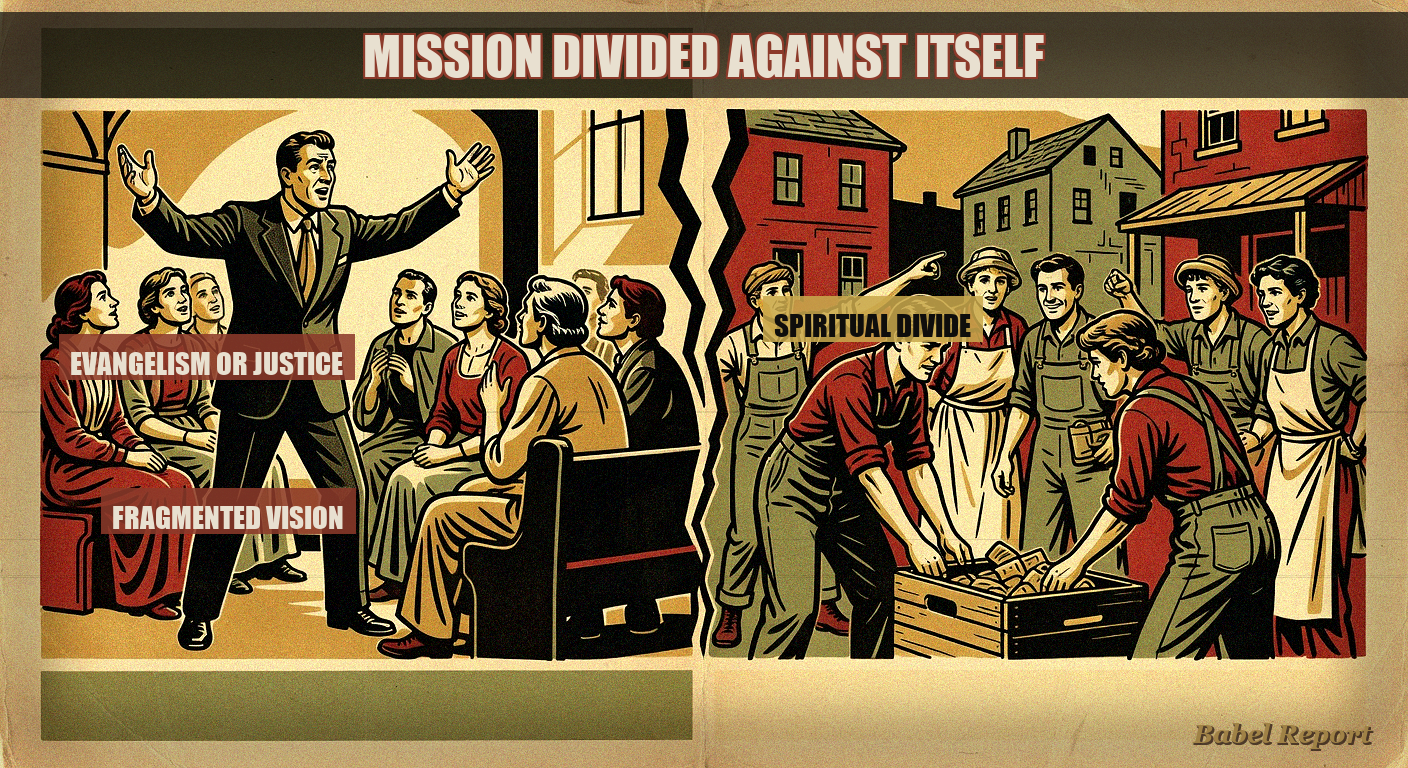
The drift from biblical to modern salvation categories has created a split-level world where Christians feel forced to choose between evangelism and social concern, between saving souls and seeking justice, between spiritual transformation and political engagement. This great divide has nothing to do with Jesus (YHWShA) and the New Testament and everything to do with the absorption of philosophical assumptions that fragment what the biblical writers held together.
Consider how this plays out in contemporary church life. Some Christians focus exclusively on personal evangelism, arguing that getting people saved for eternity is the only thing that ultimately matters, while social concern is at best a distraction and at worst a betrayal of gospel priorities. Others focus exclusively on social justice, arguing that feeding the hungry and liberating the oppressed is the real work of the kingdom, while talk of personal salvation is irrelevant or even harmful to those efforts.
Both positions reflect the impoverishment of modern salvation categories. The first group has absorbed the Greek assumption that spiritual concerns trump material ones, forgetting that the God of Israel is committed to the restoration of his entire creation. The second group has reacted against otherworldly escapism but lost touch with the personal transformation that makes social renewal possible and sustainable.
The biblical vision refuses this false choice. When Isaiah envisions the servant of the Lord bringing justice to the nations, that servant also bears the sins of his people. When Jesus announces the kingdom of heaven, he both heals the sick and forgives sins, both challenges unjust power structures and calls individuals to repentance. When Paul describes the ministry of reconciliation, it encompasses both personal reconciliation with God and the breaking down of ethnic and social barriers that divide communities.
Let me be clear about what I am not saying. I'm not suggesting that all Christians must be equally involved in all aspects of kingdom work, or that personal evangelism and social concern require identical methods or emphases. Different believers have different callings, different gifts, and different spheres of influence. But what cannot be sustained – not if we want to remain faithful to the biblical narrative – is the assumption that these represent competing visions of Christian mission rather than complementary aspects of God's single restoration project.
Personal Piety vs. Kingdom Ethics
The reduction of salvation to individual spiritual transformation has made it difficult to sustain robust communal and political engagement that flows naturally from Christian conviction rather than being imposed from outside as a secondary application. When salvation becomes primarily about personal forgiveness and individual relationship with God, the connection to social ethics becomes tenuous and easily abandoned when other priorities press.
This explains why so many contemporary Christians struggle to connect their personal faith with their political commitments, their private prayers with their public responsibilities, their individual spiritual formation with their communal and civic obligations. The modern salvation framework simply lacks the resources to hold these together coherently.
The biblical framework, by contrast, assumes that personal transformation and communal responsibility are inseparable. To be incorporated into Christ means joining the alternative community that embodies God's justice in the world. To receive God's forgiveness means committing to the forgiveness and restoration of others. To experience God's liberation means working for the liberation of those who remain in bondage.
This isn't imposed from outside as an additional requirement. It flows naturally from the corporate nature of salvation itself. When you're saved into God's people, you take on the character and mission of God's people. When you're incorporated into the Messiah, you participate in the Messiah's work of establishing God's kingdom on earth.
The recovery of this biblical vision transforms both personal spirituality and social engagement. Personal spiritual disciplines become training in kingdom citizenship rather than individual self-improvement. Social concern becomes an expression of salvation rather than a separate moral obligation. The two reinforce each other rather than competing for attention and resources.
The Loss of Cosmic Hope
Perhaps the most serious consequence of our semantic drift has been the loss of the biblical vision of God's comprehensive renewal project. When salvation gets reduced to personal afterlife insurance, we lose touch with the cosmic scope of God's restoration work. The biblical promise that God will make all things new gets replaced by the truncated hope that some individual souls will escape from the material world altogether.
This loss of cosmic hope impoverishes Christian imagination and motivation in multiple ways. Without the vision of God's coming kingdom, Christian ethics become merely personal moral improvement rather than participation in the alternative social order that God is establishing. Without the promise of resurrection, Christian hope becomes disembodied spirituality rather than the restoration of full humanity in a renewed creation. Without the expectation of cosmic renewal, Christian mission becomes evacuation from the world rather than preparation for its transformation.
The consequences extend beyond theology into practical discipleship. Christians who have lost touch with cosmic hope struggle to find motivation for long-term cultural engagement, environmental stewardship, or political reform. If the world is destined for destruction and only souls matter ultimately, why invest energy in education, art, science, or social institutions that won't survive the eschaton?
The biblical vision provides a different motivation entirely. If God intends to renew his creation rather than replace it, if the resurrection of the body means the redemption of material existence rather than escape from it, if the kingdom of heaven means God's will being done on earth rather than the evacuation of souls to another realm, then everything changes. Cultural work becomes kingdom work. Environmental concern becomes theological necessity. Political engagement becomes Christian discipleship.
This is not to suggest that all present achievements will survive unchanged into God's new creation. The biblical vision includes both continuity and transformation, both the preservation of what is good in creation and the purging of what corrupts it. But the fundamental trajectory is renewal rather than replacement, restoration rather than abandonment.
Recovering Ancient Hope for Contemporary Faith
Holding Corporate and Individual Together
The challenge for contemporary Christianity is learning to hold together what the biblical writers never separated: corporate salvation and individual transformation, social renewal and personal conversion, cosmic restoration and spiritual regeneration. This isn't a matter of finding the right balance between competing concerns but of recovering the integrated vision that holds them together as aspects of God's single restoration project.
The starting point is recognizing that individual transformation occurs within the larger narrative of corporate renewal. God isn't saving isolated individuals who then happen to form communities. God is forming a renewed people, and individuals are transformed through participation in that corporate reality. Personal salvation means being incorporated into the community that embodies God's alternative social order and extends his reign in the world.
This corporate framework doesn't diminish individual significance but locates it within its proper context. Your individual story matters precisely because it's part of God's larger story of making all things new. Your personal transformation contributes to the formation of the community that serves as a sign and foretaste of God's coming kingdom. Your individual gifts and calling find their purpose in the mission that God has given to his people as a whole.
At the same time, corporate renewal depends on individual transformation. Communities don't change without individuals being changed. Social structures don't get reformed without persons who embody alternative values. The kingdom of God advances through the multiplication of lives that have been personally transformed by participation in Christ's death and resurrection.
The biblical vision holds these together without flattening them into each other. Individual transformation and corporate renewal remain distinct but inseparable aspects of the salvation that God works through Christ by the Spirit. The church that recovers this integrated vision will find itself equipped for mission that is both deeply personal and thoroughly social, both spiritually transforming and politically engaging.
The Church as Salvation's Present Sign
Understanding salvation in its biblical fullness transforms how we think about the church's identity and mission. The church isn't simply a collection of individually saved souls who gather for mutual encouragement and collective worship. The church is the community that embodies God's salvation in the present as a sign and foretaste of his coming kingdom.
This means that the quality of the church's communal life becomes part of its witness to the gospel. How Christians treat one another, how they handle conflict and disagreement, how they care for the vulnerable and marginalized, how they steward resources and exercise authority – all of these become expressions of the salvation they proclaim. The church's internal life demonstrates whether the gospel actually transforms human relationships or merely provides comfort for private spiritual needs.
This vision elevates the stakes of church life considerably. If the church is called to embody God's alternative social order, then failures of love, justice, and reconciliation within Christian communities undermine the credibility of Christian claims about God's transforming power. The church that tolerates racism, sexism, economic exploitation, or environmental destruction contradicts its own message about the God who is making all things new.
But this same vision provides unprecedented motivation for pursuing authentic Christian community. When the church understands itself as salvation's present sign, it discovers that its communal life isn't merely preparation for individual heavenly destiny but participation in God's restoration project that will ultimately encompass all of creation.
The church anticipated through the mission of God's people isn't an otherworldly escape from present responsibilities but the training ground for the renewed humanity that God is forming. Christians learn to live as citizens of the coming kingdom by practicing kingdom relationships in the present. They develop the character and skills needed for God's new creation by embodying them in their current communities.
Here is what strikes me as most remarkable about this vision: it transforms both the urgency and the patience with which Christians approach their mission. The urgency comes from understanding that the church's present witness matters eternally – not just for the salvation of individuals but for the demonstration of God's intention to restore all things. The patience comes from understanding that the church's imperfections don't invalidate God's promises – the kingdom has come but not in its fullness, and the church lives in the tension between the "already" and the "not yet."
The path forward requires neither defensiveness about the church's failures nor resignation about its limitations, but honest acknowledgment of the gap between the church's calling and its performance, coupled with renewed commitment to pursuing the vision of salvation that encompasses both personal transformation and cosmic renewal. The church that recovers this biblical understanding of salvation will find itself equipped for mission that is both realistic about present limitations and hopeful about God's ultimate purposes.
And perhaps, in a world so fractured and uncertain, so divided between individual self-interest and collective despair, that is precisely the vision we need. The ancient hope of God's comprehensive restoration project, embodied in communities that practice the reconciliation they proclaim, offers an alternative to both privatized spirituality and secular activism. It suggests that the question of what does salvation mean isn't merely historical curiosity but contemporary necessity. The story is not over. The invitation to participate in God's renewal project still stands, for individuals and communities willing to discover what salvation actually meant, and might mean again, in a world that has forgotten how to hope for anything more comprehensive than personal happiness or political victory.
The God of Scripture, it turns out, has always been after something bigger than either of those diminished ambitions. He intends to make all things new, and he invites his people to participate in that project through lives and communities that embody the restoration they announce. That's what salvation means, has always meant, and will mean when the project reaches its completion and every tongue confesses that Jesus (YHWShA) is Lord (YHWH) to the glory of God the Father.


