
Here stands one of theology's most perplexing puzzles. God (alohim), whom the Hebrews called Yahuah (YHWH), surveys all the families scattered across the ancient Near East and settles on one man from Ur of the Chaldees. Abraham receives the promise while his neighbors remain unchosen. And we are told this represents divine love for the whole world.
The contradiction seems glaring. How can cosmic favoritism serve universal redemption? Modern election theology has wrestled with this scandal for centuries, generating elaborate systems to explain why some receive grace while others do not. Reformed traditions speak of sovereign choice, while Arminian theology (following the Dutch theologian Jacobus Arminius, who emphasized that God's grace enables genuine human choice rather than overriding it) emphasizes human response. Critics dismiss the whole framework as divine whim dressed in theological language.
But here is what strikes me as most remarkable: these debates consistently miss the ancient context that shaped how Abraham himself would have understood his calling. The scandal dissolves when we recognize that God's choice followed established patterns of dynastic succession and covenant delegation known throughout the ancient world. Abraham was not plucked from obscurity through arbitrary divine preference. He was adopted into a redemptive mission that had universal restoration as its explicit goal from day one.
The Ancient Blueprint: How Near Eastern Adoption Reveals God's Method
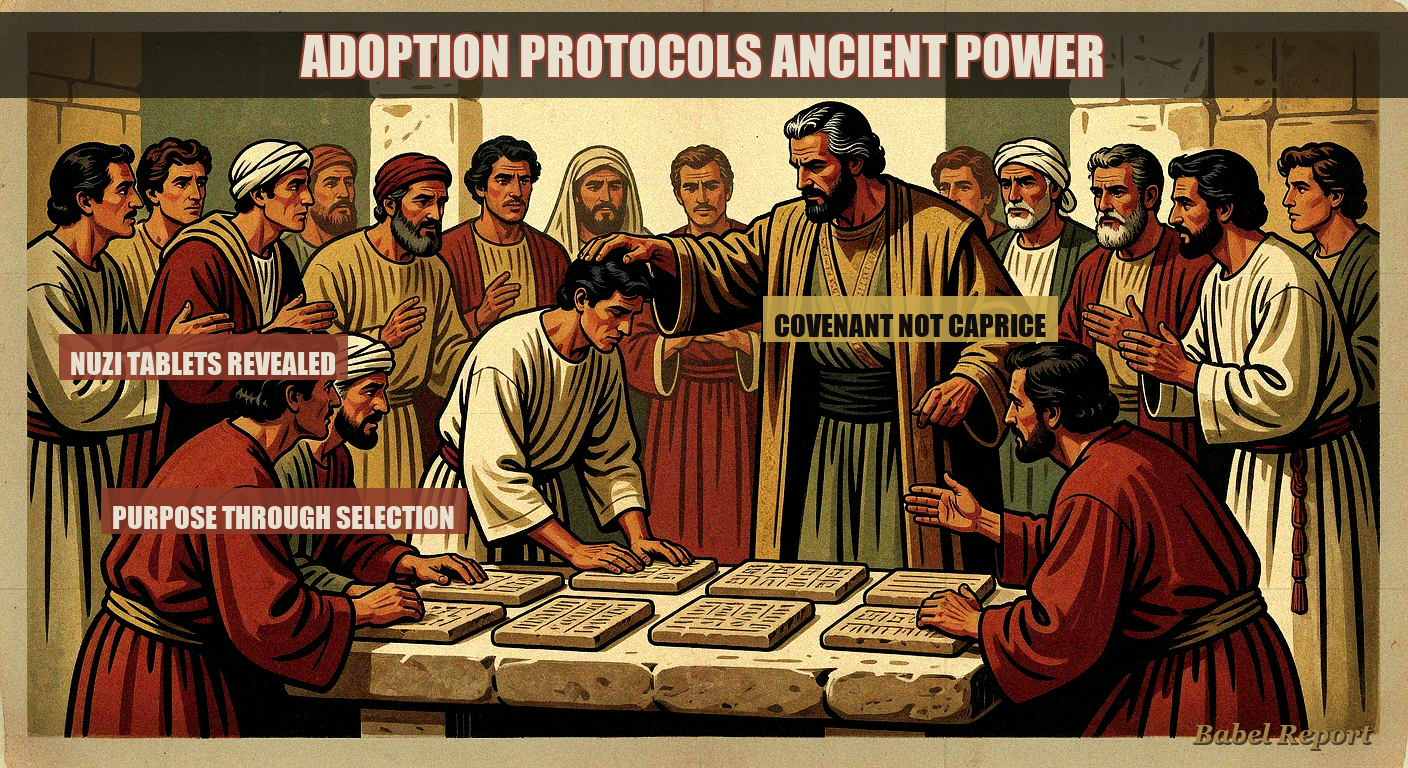
Covenant Ceremony vs Divine Caprice
Walk through the ancient Near Eastern world of Abraham's time, and you encounter adoption ceremonies that illuminate what modern theology has obscured. When a king needed to establish succession or delegate authority across his realm, he did not choose randomly. The selection followed protocols designed to accomplish specific dynastic purposes through representative agents.
The tablets from Nuzi reveal how adoption worked in practice. A childless man would adopt an heir not merely to provide comfort in his old age, but to ensure his name and estate continued serving their intended function. The adopted son inherited both privilege and responsibility. He received the family blessing and bore the family mission. This was delegation, not favoritism.
Archaeological evidence from Mari shows similar patterns in royal succession. When a king appointed governors over distant provinces, the choice reflected strategic necessity rather than personal preference. The appointed official represented the crown's authority and bore responsibility for extending the kingdom's influence throughout his assigned territory.
Here lies the insight that transforms our understanding of Abraham's calling. The Genesis narrative employs this same covenant framework. When God cuts covenant with Abraham in Genesis 15, the ceremony follows established Ancient Near Eastern protocols for adopting heirs and delegating authority. The smoking fire pot and flaming torch passing between the animal pieces signal not arbitrary divine selection, but purposeful appointment to a redemptive office that would serve all nations.
The Representative Pattern in Scripture
Throughout Scripture, divine election consistently follows this representative pattern. Moses is chosen not because the other Israelites deserve less grace, but because someone must stand before Pharaoh on behalf of the enslaved multitude. David receives anointing not as personal privilege, but as the instrument through which God's kingdom purposes will advance for all Israel.
The pattern becomes explicit in the Servant Songs of Isaiah. Here we encounter one who is chosen, formed, called, yet his mission extends to the ends of the earth. "It is too small a thing that you should be my servant to raise up the tribes of Jacob and to restore the survivors of Israel; I will give you as a light to the nations, that my salvation may reach to the end of the earth" (Isaiah 49:6). Election enables universal reach rather than preventing it.
This representative framework explains why biblical election never functions as exclusive privilege. Every chosen figure bears responsibility for those they represent. Noah preserves humanity through the flood. Abraham becomes the channel through which all families receive blessing. Moses mediates between God and Israel. David's throne becomes the platform for messianic hope. The pattern runs consistently through redemptive history: one chosen to serve many.
Why Limitation Became the Path to Liberation
Of course one can object to divine limitation in principle. Many do, and for reasons they find compelling. Why should God work slowly through history when he could save everyone right now? But what you cannot do (not if you want to remain coherent) is dismiss this method as arbitrary after examining how it actually functions.
The limitation was strategic, not accidental. God chose to restore what was broken in Eden by working through the very historical processes that sin had corrupted. Rather than bypassing human agency, the covenant method sanctifies it. Rather than overwhelming human freedom, it invites participation. Rather than negating cultural development, it redeems it through particular historical vehicles.
Consider the alternative. Immediate universal transformation would bypass the patient work of covenant relationship that shapes character over generations. It would override the historical development through which human communities learn to reflect divine purposes. It would eliminate the gradual revelation that allows finite creatures to comprehend infinite grace progressively rather than being overwhelmed by it all at once.
The ancient Near Eastern adoption pattern reveals why God chose this path. Just as earthly adoption creates family bonds that develop over time through shared experience, divine adoption creates covenant relationship that deepens through historical engagement. Abraham's descendants would learn to embody God's purposes for all nations by actually living out those purposes across centuries of covenant experience.
Election to Function: The Missed Distinction in Modern Debates
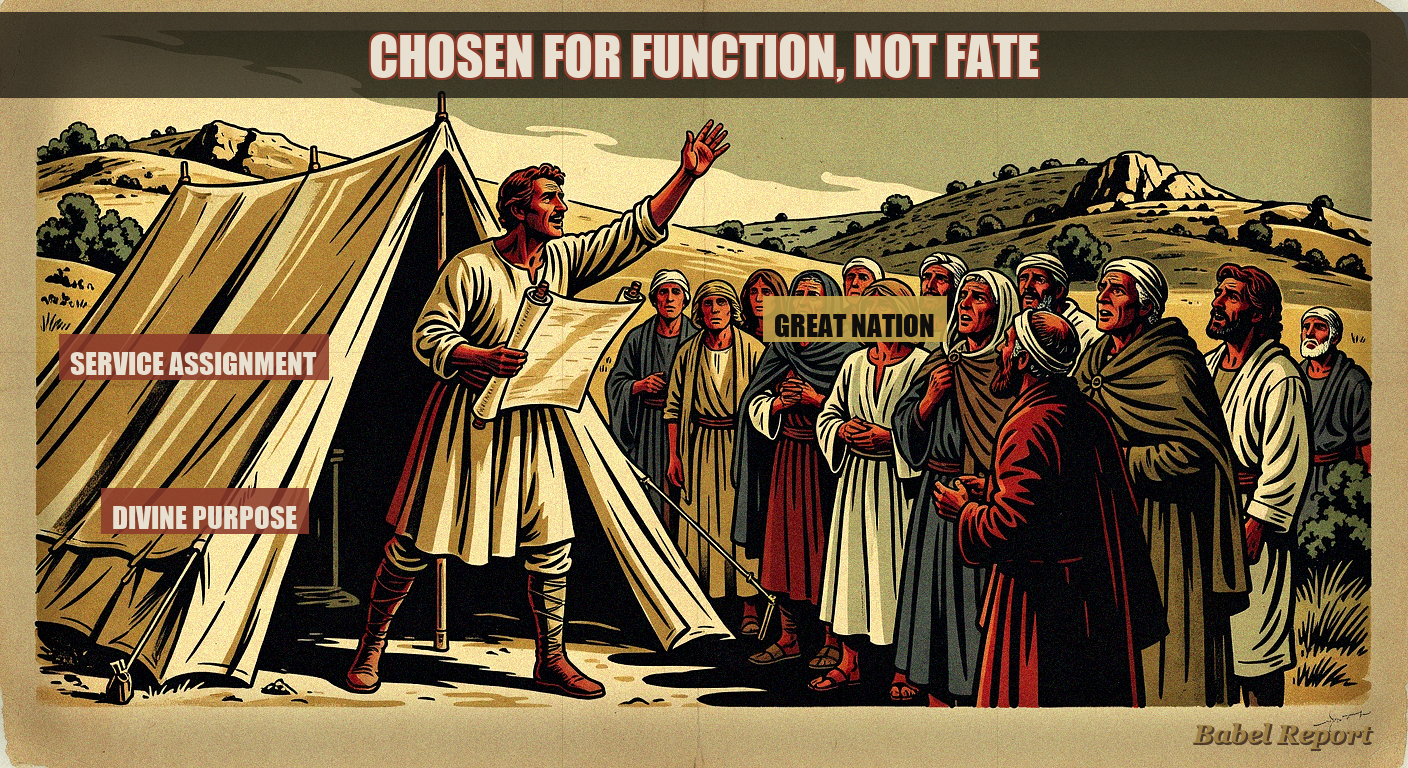
Service Assignment vs Salvation Status
Between election in the Hebrew Scriptures and election in the theological formulations of later centuries, there sometimes seems to be a great gulf fixed. Few and narrow are the bridges from one to the other. Modern debates typically reduce election to individual soteriology: who receives eternal salvation and why. But this framework misses the primary biblical emphasis on election to function rather than election to final destiny.
Abraham's calling in Genesis 12 makes this distinction explicit. "I will make of you a great nation, and I will bless you and make your name great, so that you will be a blessing. I will bless those who bless you, and the one who curses you I will curse; and in you all the families of the earth shall be blessed." The universal scope appears embedded in the particular calling from the very beginning.
This is not election to salvation in the later theological sense, but election to service in the biblical sense. Abraham receives not exclusive privilege but covenant responsibility. His blessing serves as the mechanism through which God will bless every family on earth. His descendants inherit both the promise and the mission that makes the promise effective for all nations.
The confusion between these categories has generated unnecessary theological conflicts. When Scripture speaks of Israel as chosen, it describes their role as the covenant people through whom God will reach all peoples. When Jesus (YHWShA) tells his disciples "You did not choose me, I chose you," he immediately clarifies the purpose: "and appointed you to go and bear fruit, fruit that will last." Election to function, not election to exclusive salvation.
The Abrahamic Job Description
Examine Abraham's original calling more carefully, and you discover what amounts to a job description for universal blessing. The Hebrew construction of Genesis 12:3 contains a reflexive element often missed in translation: "in you all the families of the earth shall bless themselves." Abraham becomes the standard by which all nations measure blessing.
This pattern persists throughout the Abrahamic narratives. When Abraham intercedes for Sodom, he stands as representative of divine mercy before divine justice. When he offers Isaac on Mount Moriah, he demonstrates the faith through which all nations will eventually approach God. When he negotiates with the Hittites for Sarah's burial plot, he models the covenant relationship that will expand to include every tribe and tongue.
The Abrahamic covenant establishes not a club of divine favorites, but a redemptive office. Abraham and his descendants become the priesthood for all humanity – the designated channel through which God will accomplish the restoration promised after Eden's fall. Their election serves everyone else's ultimate inclusion rather than their own exclusive salvation.
Beyond Calvinist-Arminian Categories
Traditional debates between Reformed and Arminian traditions miss the point entirely. Both sides reduce election to a question about individual salvation. They argue about the mechanism: Does God choose, or do humans respond? But Scripture places the emphasis elsewhere. Election is not primarily about who gets saved. It is about God's strategy to redeem human history itself.
The Calvinist tradition gets something important right: God chooses us, not the other way around. Our good deeds don't earn us a place at the table. But here's what they often miss. When God chooses someone, it's not just for their own sake. It's so they can represent others. The Arminian tradition also gets something important right: we're not puppets. God invites us to participate, to respond, to choose. But here's what they often miss. Our participation only works because we're stepping into roles that God has already established. These roles are meant to bless all nations, not just ourselves.
Both traditions would benefit from recovering the Ancient Near Eastern covenant context. Election functions as divine adoption into redemptive responsibility, not as the final determination of individual salvation. God chooses covenant partners to serve the restoration of all creation, not to compose an exclusive club of the eternally saved.
The biblical witness consistently presents election as invitation to participate in God's mission for the world. Abraham is chosen to bless all families. Israel is chosen to be a light to the nations. The church is chosen to proclaim the gospel to every creature. Election enables mission rather than replacing it.
The Scandal That Saves: Why Particularity Enables Universality
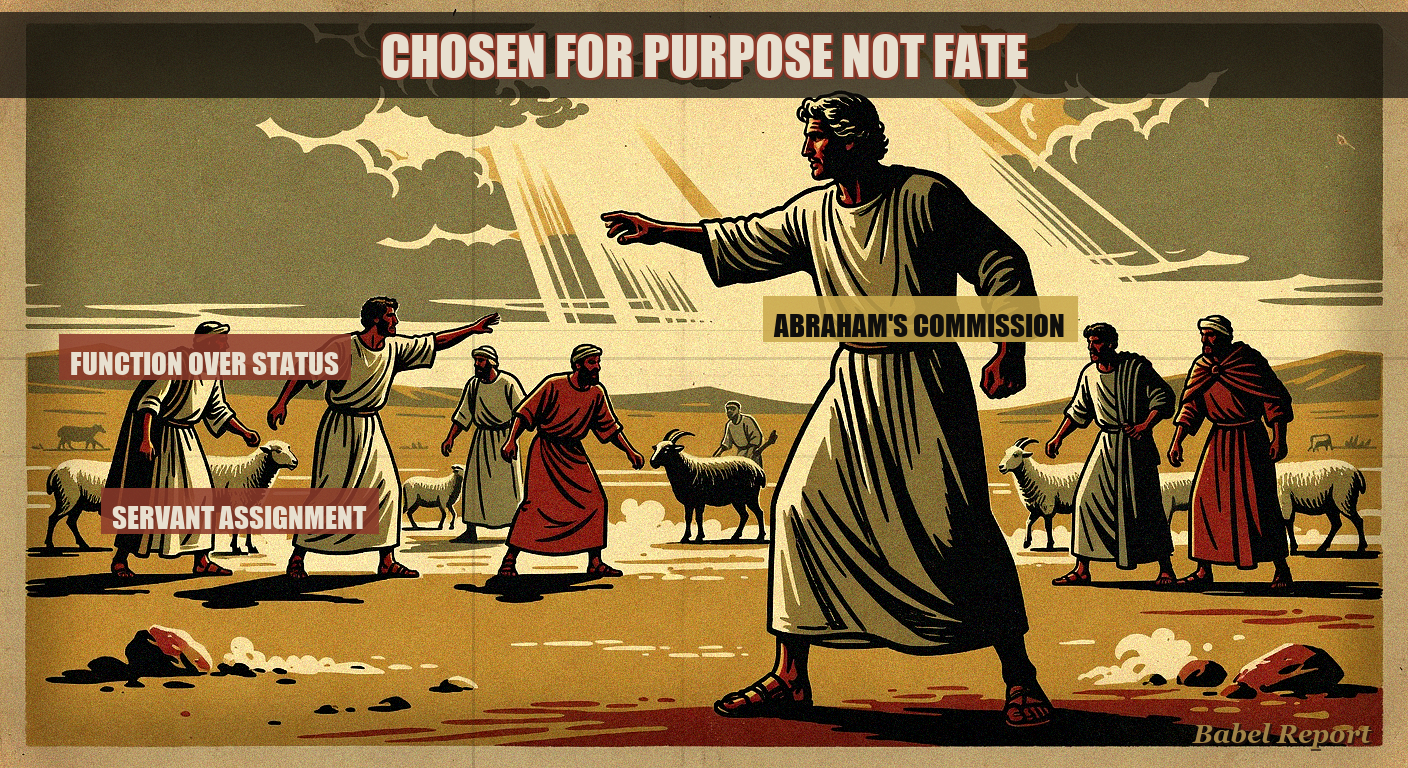
One Family, Every Nation
Here lies the profound irony that modern theological discourse often misses: God's choice of one family created the historical pathway through which blessing would eventually reach every nation. The limitation enabled the liberation rather than preventing it.
Follow the story from Abraham to its final completion, and you see how God's particular choices serve his universal purpose. God chooses Abraham's family not to exclude other nations, but to reach them. The covenant with Israel creates the pathway through which all peoples will meet the one true God. The incarnation comes through the Jewish Messiah so that every tribe and tongue can become God's adopted children.
This becomes crystal clear when the New Testament writers explain how non-Jews join God's people. Paul never suggests that Gentiles bypass Abraham to reach God. He roots their access directly in Abraham. Gentiles become "fellow heirs, members of the same body, and sharers in the promise in Messiah Jesus." The covenant made with one man creates space for the entire world.
The pattern appears throughout redemptive history. God establishes the Davidic dynasty. He promises this particular throne will become the platform for universal justice and peace. Isaiah envisions the servant's mission. The chosen one becomes "a light for the nations, that my salvation may reach to the end of the earth." Revelation depicts the final restoration. It presents the particular city of New Jerusalem as the dwelling place for all nations. The movement is always the same. From the specific to the universal. From the chosen few to the waiting world.
The Method Behind the Madness
The tension between God's special choice of some people and his love for everyone disappears when we see something crucial. God limits himself on purpose. This is how he saves the world. The real question is not whether God could have done things differently. The real question is whether God's actual method works better than anything we might dream up. And that's the point.
Consider how God's promise to Abraham actually works in Scripture. It doesn't build walls between peoples. It builds the bridge by which all peoples come to God. It doesn't create permanent divisions between the chosen and unchosen. It creates the historical process through which the unchosen become chosen. It doesn't limit God's blessing to certain families. It extends God's blessing through certain families to every family on earth.
The ancient world knew this pattern well. Emperors appointed governors to extend their authority across distant territories. The appointment expanded imperial reach rather than limiting it. Fathers adopted heirs to preserve family estates. The adoption secured the estate's future rather than restricting it. Kings established dynasties to maintain their rule across generations. The royal line strengthened the kingdom rather than weakening it.
God's adoption of Abraham follows this same logic. The particular choice serves universal purposes by creating the historical mechanism through which those purposes will be accomplished across the centuries. Abraham becomes the means through which God will reclaim what was lost in Eden and restore what was broken by the fall.
Progressive Revelation Through Covenant History
Why did God take so long? Why not fix everything at once? The answer lies in how covenant relationships actually work. Think of it this way: you cannot teach a child to drive by handing them keys to a Formula One car. Human communities needed time to learn what it means to live in partnership with the divine. We are finite creatures trying to grasp infinite love. That takes practice. Broken cultures needed slow healing before they could truly reflect divine purposes. The method was slow because love is always slow.
Abraham's descendants would learn to represent God to the nations by living out his character themselves. They would understand divine justice by experiencing it in their own national story. They would learn divine mercy by receiving it when they failed and God restored them. They would embody God's mission by joining his work to reclaim all creation.
This process required historical time and cultural development. It demanded the patient work of covenant formation that shapes character through relationship. It necessitated the gradual revelation that allows finite minds to grasp infinite truths progressively rather than being overwhelmed by immediate complete disclosure.
The pattern continues in the New Testament. Jesus picks twelve disciples to represent the restored twelve tribes. But their mission reaches every nation on earth. Paul becomes the apostle to the Gentiles. His work makes all peoples "fellow heirs" with Israel in God's promises. The church starts in Jerusalem with Jewish believers. Then it spreads to include every tongue, tribe, people, and nation.
From Abraham to All Nations: The Pattern's Fulfillment
The Innumerable Host of Revelation
When John receives his vision on Patmos, he sees exactly what God promised Abraham from the start. A countless crowd stands before the throne. They come from every nation, every tribe, every people group, every language. The method that looked narrow and exclusive has produced the universal result that was always the goal. What seemed like divine favoritism was actually divine strategy.
This connection is not accidental. The Revelation vision deliberately echoes the language of God speaking to Abraham in Genesis 15: "Look toward heaven and count the stars, if you are able to count them. So shall your descendants be." What began as a promise to one childless couple finds fulfillment in the multinational host that exceeds all counting. The scandal of particularity achieves the miracle of universality.
Abraham's promise worked exactly as God intended. His biological children became the people through whom the world would meet the true God. His spiritual children now include men and women from every corner of the earth. The covenant keeps its double promise: the Jewish people remain God's chosen nation, while every other people group gets invited into the same family as full heirs of the same inheritance.
Follow the family tree from Abraham to Jesus. You will find both continuity and expansion. The Messiah comes from Abraham's bloodline, just as God promised. But his mission reaches all the families of earth, also just as God promised. The particular bloodline serves the universal blessing. This is exactly what God announced to Abraham at the beginning of the story.
Election as Invitation, Not Exclusion
This changes how we think about God's choosing. The question is not who gets saved and why. The question is how God's choice of specific partners serves his plan to redeem everything. We are not defending divine favoritism. We are explaining divine strategy. We are not resolving some contradiction between the particular and the universal. We are recognizing how beautifully they work together.
God chose Abraham not to shut others out, but to bring everyone in. The covenant creates a path for outsiders to become insiders. The chosen people become the bridge. Through them, God invites everyone else to join the family. Election opens the door. It doesn't slam it shut.
The ancient adoption pattern makes this clear. When a king adopted an heir, he did not exclude his other subjects from royal benefits. Instead, he established the succession. Through this heir, royal blessings would continue flowing to all subjects for generations to come. When a father adopted a son, he did not prevent others from experiencing fatherly care. He secured the family legacy. Through this son, such care would extend to grandchildren and great-grandchildren yet unborn.
God's adoption of Abraham follows the same pattern. The specific covenant with one man secures a universal blessing. This blessing will flow through Abraham's family line to all peoples across all generations. The chosen family becomes the channel. Through them, every family on earth gains access to covenant relationship with YHWH of heaven and earth.
The invitation still stands. What started with Abraham carries on through his children, both physical descendants and those who share his faith. God promised to bless all nations through Abraham's family. He keeps that promise by welcoming every family that says yes to the invitation first given through Abraham's line.
And perhaps, in a world so fractured by ethnic suspicion and religious division, this is precisely the theological framework we need. God's method of working through particular people to reach all people offers hope. Our differences can serve unity rather than preventing it. The scandal of election becomes the wisdom of inclusion. God chose limitation as the pathway to liberation for everyone, everywhere, always. The story began with one man from Ur. It narrows to one man from Nazareth. YHWShA is the chosen representative who opens the door. All who believe in him as the Son of God become sons and daughters themselves. The story concludes with representatives from every nation standing before the throne. The promise that seemed so troublingly narrow proves spacious enough to contain multitudes.


